Why Nations Fail
Why Nations Fail: The Origins of Power, Prosperity, and Poverty by Daron Acemoglu and James A. Robinson is a must read for anyone trying to understand global inequality, political economy, and drivers of national prosperity. The book is also essential reading for international aid and development professionals.
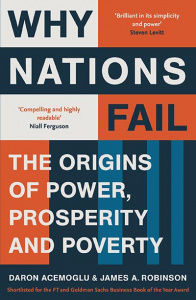
The authors argues that economic success depends on inclusive political and economic institutions that encourage innovation, property rights, and participation, rather than geography, culture, or ignorance. Extractive institutions, which concentrate power and wealth in the hands of a few elites, cause poverty and national failure. They illustrate this with the example of Nogales, where the divide between the prosperous U.S. side and the impoverished Mexican side despite shared culture and geography, demonstrates how different institutional frameworks (inclusive vs. extractive) create vastly different economic realities.
“NATIONS FAIL TODAY because their extractive economic institutions do not create the incentives needed for people to save, invest, and innovate. Extractive political institutions support these economic institutions by cementing the power of those who benefit from the extraction.”
Key Takeaways from Why Nations Fail
The Virtuous Circle: Inclusive political institutions support inclusive economic institutions, which in turn generate prosperity. This wealth empowers a broader coalition of citizens, making it highly resilient against elite power grabs.
The Vicious Circle: Extractive political institutions pave the way for extractive economic systems. The wealth extracted by elites funds the continued suppression of the population, reinforcing a self-perpetuating trap of poverty and instability.
Creative Destruction: True, sustainable economic growth relies on technological innovation, which inevitably replaces old technologies and destabilizes established elite monopolies. Elites under extractive regimes actively block innovation to protect their own political power.
Critical Junctures & Institutional Drift: Nations often experience slight structural differences due to historical contingency (institutional drift). When a major historical shock (a critical juncture) occurs such as the Black Death, the expansion of Atlantic trade, or colonialism, it can push countries onto radically divergent institutional paths.
The book posits that development aid rarely works because it is often wasted by elite-controlled extractive regimes. Instead, prosperity requires breaking the political monopoly of these elites to create a level playing field.


Comments